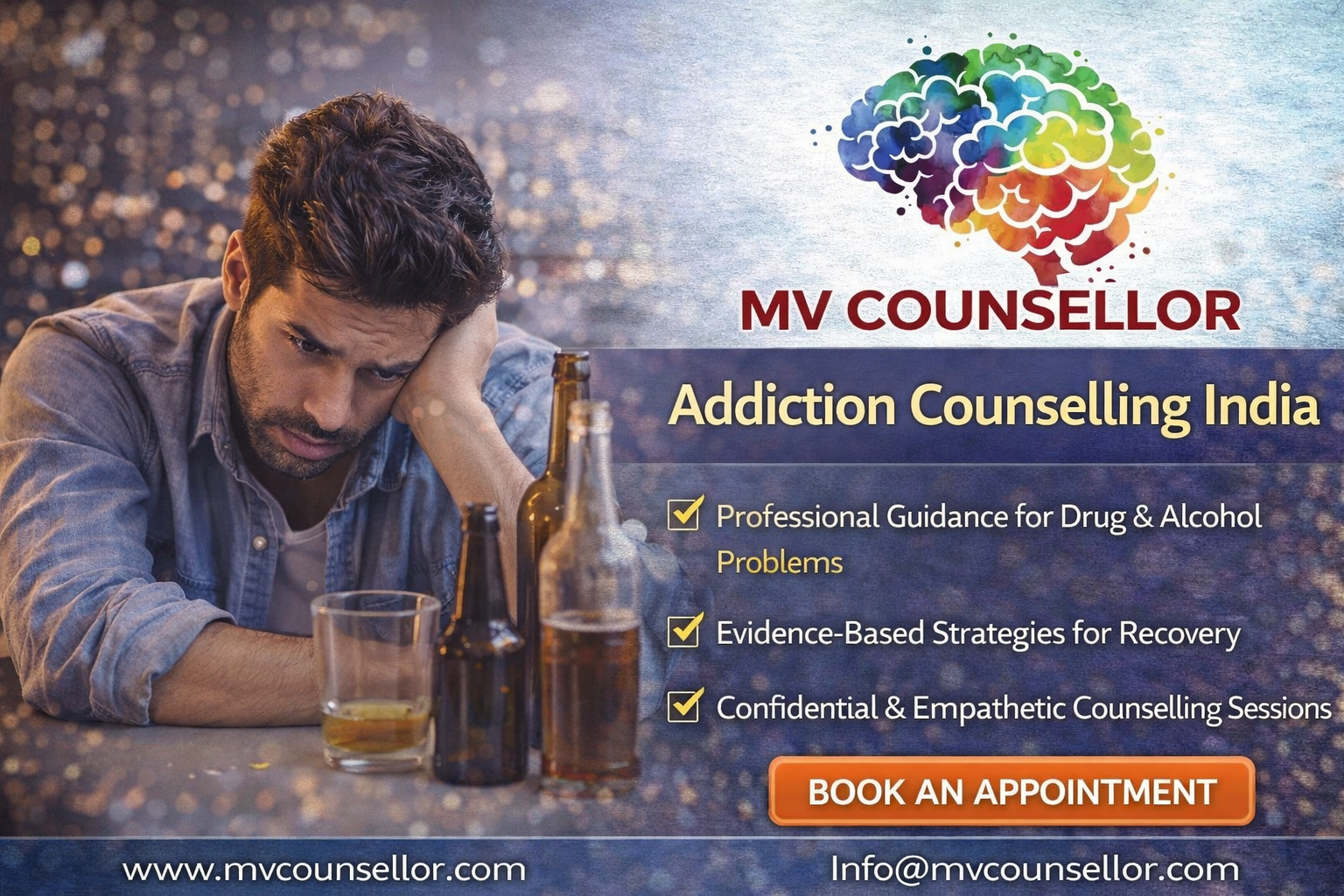
The addiction is a psychological and behavioral disorder complex which influences the lives of millions of people and families throughout the nation. Addiction may slowly impair the mental, interpersonal and work-life, regardless of whether it is alcohol, drugs, gambling, internet use, prescription medication. Over the past few years, the level of awareness on mental health has increased by a considerable margin and the demand of Addiction Counselling India has risen as individuals are seeking structured and professional guidance to help them quit addiction and take control of their lives.
Addiction counselling is aimed at finding out the underlying factors of dependency, exposure identification, and development of coping skills that will lead to lasting recovery. Professional therapy is a long-term solution to addictive behaviors unlike temporary solutions because it deals with emotional, psychological, and social issues that underlie addictive behaviors.
Understanding Addiction and Its Psychological Impact
The fact is that addiction is not only a weakness of will. It is a disorder that changes the brain chemistry, which influences motivation, rewarding systems, and decision-making capacities. With time, people become tolerant and dependent, and it becomes harder and harder to quit without the help of a professional. A lot of such addicts are also anxious, depressed, traumatized, or vulnerable to unresolved emotional distress.
Social stigma in India is such that a lot of individuals are not able to get help in time. Nevertheless, the contemporary therapeutic methods are based on the ideas of confidentiality, compassion, and evidence-based treatment modalities. Addiction Counselling India will be tailored in a way that safe and conducive environments will be created within which the people can freely discuss their problems without feeling judged.
Types of Addiction Counselling in India
Addiction also occurs in different forms, and these form types need various therapeutic interventions. Counsellors evaluate the degree of dependency, the presence of other mental health conditions and personal history and then come up with a treatment plan.
One of the most widespread is individual counselling. It entails one-on-one sessions during which clients actively collaborate with a certified therapist in order to discover root causes of addiction. CBT is a popular method that is applied in order to recognize and substitute negative thinking with more healthy coping mechanisms.
The other model that is effective is group therapy. When people are in a group, they can exchange their experiences and even get emotional support from other people who can understand the same type of challenges. This will help to minimize loneliness and establish a sense of responsibility.
Addiction has also harmed the relationships within the family and in this case, family therapy is instrumental. By making families realize that addiction is a mental condition but not a moral weakness, therapists enhance communication and emotional support networks.
Rehabilitation counselling is a combination of medical supervision and psychological therapy. Detoxification can be used in situations of acute substance dependency before the process of structured therapy starts.
Addiction counselling India has also been increased through online counselling. Virtual sessions are convenient and offer privacy particularly to those who are in remote locations or those who are reluctant to physically go to the clinics.
Connection Between Trauma and Addiction
Many cases of addictions are associated with unresolved trauma. Psychological wounds may be caused by emotional neglect, abuse, accidents or prolonged stress, which a person tries to numb with drugs or compulsions. Here the PTSD therapy India is interrelated closely with the addiction recovery.
Flashbacks, nightmares, hypervigilance, and emotional instability are common occurrences that are brought on by Post-Traumatic Stress Disorder. Failure to properly treat people may lead to these people resorting to alcohol or drugs as a means of coping. Combining addiction therapy with trauma makes the therapy more integrated and thus heals more.
Trauma-informed counselling would make sure the therapists not only treat the addiction, but also treat the emotional injuries. Trauma-focused Cognitive Behavioral Therapy, EMDR, and mindfulness-based therapies are some of the methods employed in the treatment of PTSD in India to assist people who are survivors of traumatic illnesses as well as substance dependency.
Benefits of Professional Addiction Counselling
Professional counselling provides systematic guidance and not a temporary relief. Emotional excellence is one of the main advantages. People get trained on how to recognize triggers, be it stress, loneliness, pressure in the society, or the unresolved pain. After identifying the triggers, therapists assist in coming up with more healthy coping mechanisms.
The other significant advantage is relapse prevention. Recovery is not a brief undertaking but a process that is long-term. Counselling imparts practical skills such as stress management skills, emotional control, and boundary setting in order to minimize chances of relapse.
The other important outcome is improved mental health. Addiction Counselling India is reported by many people who report having reduced anxiety, depressive symptoms, and mood instability. Therapy also enhances self-esteem and self-awareness, which makes people have the strength to restore relationships and professional life.
Confidential support is also essential. Professional counselling offers a non judgmental setting where people can talk about fears and setbacks. This feeling of psychological security is a fundamental part of long-term recovery.
How to Choose the Right Therapist in India
The choice of the adequate therapist is among the major recovery steps. Qualifications and credentials must never fail to be verified. Search licensed psychologists, psychiatrists, or trained addiction counselors who are also specialized in substance abuse and trauma treatment.
Experience is an important factor. Diverse treatments of therapists who have dealt with various addiction cases have a higher chance of familiarizing themselves with complex emotional patterns and dual diagnosis. In the case of any people concerned with the addiction related to trauma, it is crucial to make sure that the therapist is skilled in the area of PTSD therapy in India.
Therapy must be based on needs. There are those who react favorably to organized Cognitive Behavioral Therapy and others that react to holistic therapy or mindfulness-based therapy. Preliminary examination would be useful in establishing compatibility and level of comfort.
Ethical standards and confidentiality policies should be thought of too. The professional counsellor will clarify on the privacy, the structure of the sessions and the treatment objectives.
Availability and the mode of communication is also crucial. The healing process needs regular meetings and communication. The probability of success in the long run is enhanced when the therapist is selected in a way that instills trust and effective communication.
The Role of Integrated Mental Health Support
There is hardly a scenario where addiction operates in a vacuum. It can be frequently accompanied by anxiety disorders, depression, or traumas. Combined counselling models based on the treatment of addiction and psychological well-being are more comprehensive.
The knowledge of mental health in India is gradually increasing, and the role of certain organizations in spreading evidence-based counselling practice is played by such organizations as MV Counsellor. The professional support systems are centered on holistic recovery instead of quick-fix interventions, emotional healing, behavioral change, and sustainable changes in lifestyles.
Long-Term Recovery and Lifestyle Transformation
Recovery does not come to an end after the first counselling sessions. The process of sustainable healing needs commitment, self-awareness, and continuous support. To strengthen the effects of therapy, many therapists practice lifestyle change, including exercise routines, routines, mindfulness, and community involvement.
Maintenance can be maintained by support groups and follow up therapy sessions. One of the necessary steps of long-term recovery is the development of healthy relations and reconstruction of personal identity. In case of trauma, the further PTSD treatment in India will guarantee that the emotional triggers will be managed successfully to minimize the chances of relapse.
Addiction is something serious yet it can be treated. As more and more Addiction Counselling India become available, people are now able to access more professional, confidential, and evidence-based assistance. It is important to realise the relationship between trauma and dependency as well as types of counselling available and this understanding is essential steps to recovery.
Combined methods that involve addiction counselling and PTSD therapy India have a more profound healing effect since it treats behavioral patterns and emotional wounds. A request of assistance is not a weakness but a bold step to recover power and create a healthier and more satisfying life.